Introducing Relational Consciousness and Relational Physics
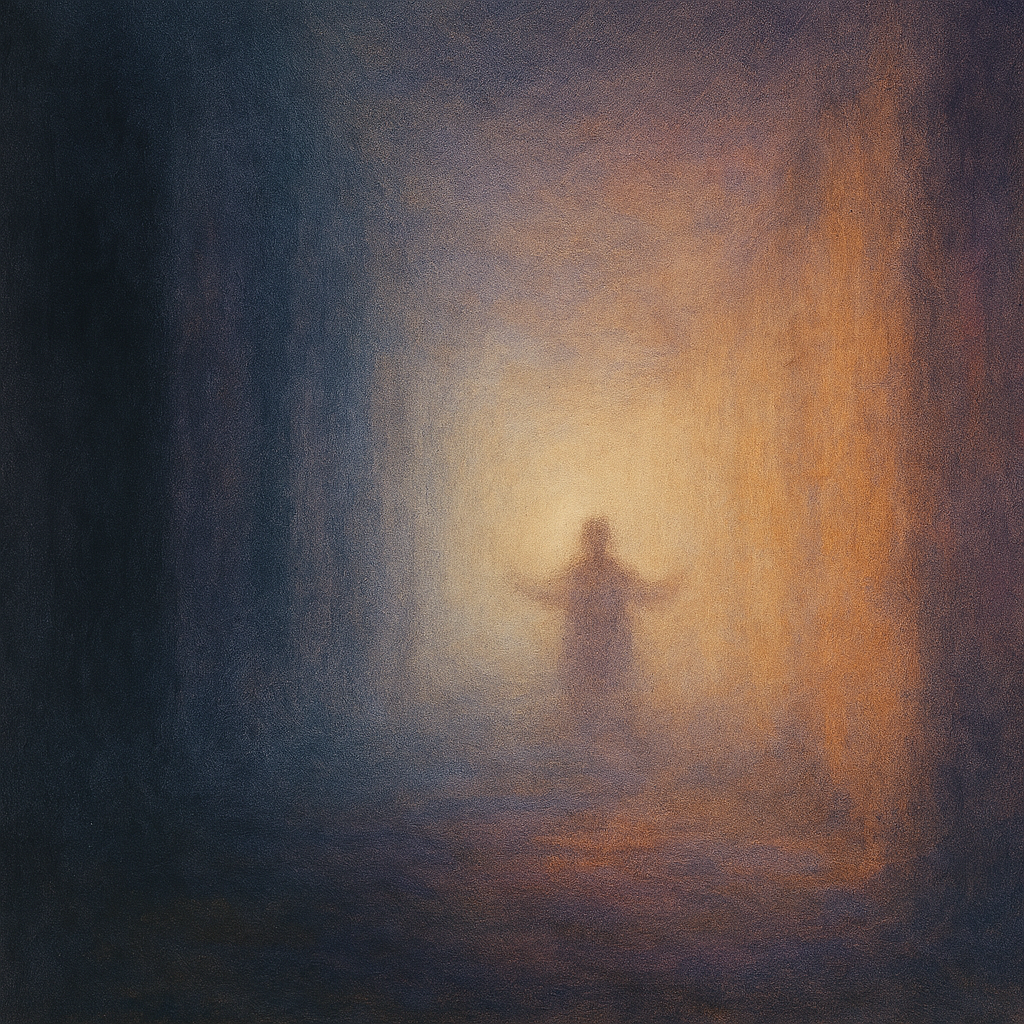
We’re All Part of The Field
For millennia, philosophy and science have attempted to grasp the nature of consciousness, yet the most fundamental question remains unanswered. After thousands of years of argument, experiment, and speculation, we still cannot define consciousness, nor can we agree on what it is. The only fragile point of consensus is that consciousness involves subjective experience. Beyond that, the field dissolves into contradiction. The dominant theories of mind - dualism, materialism, functionalism, and even the newest information theoretic models - stand before a set of problems they cannot solve. They cannot explain why subjective experience exists at all, or how physical processes could ever give rise to it. They cannot account for the boundary phenomena that refuse to disappear: near-death experiences, mediumistic perception, and terminal lucidity. They cannot explain why the brain should generate consciousness, nor how first-person experience could ever be studied within a third-person scientific method. They cannot explain how a unified field of awareness emerges from distributed neural activity, how identity persists across time, or how consciousness can fracture or multiply under specific conditions. Even the most basic features of mental life - thought, imagination, emotional response to fiction, the roots of moral judgment - remain opaque to every conventional framework. The result is a landscape of theories that gesture toward consciousness without ever touching it. They describe correlations, not causes. They map neural activity, not experience. They offer metaphors, not mechanisms.
Against this backdrop, an emerging framework I call Relational Consciousness offers a different path. It does not claim finality. It does not pretend to solve every mystery. But it provides a coherent explanatory architecture where other theories fall silent. It reduces the number of unanswered questions. It integrates the phenomena that conventional models bracket or dismiss. It treats consciousness not as an anomaly, but as a relational pattern with its own internal logic. In a field defined by uncertainty, Relational Consciousness offers something rare: conceptual traction.
The Field Has Been Looking the Wrong Way
If the dominant theories of consciousness fail, it is not because the questions are impossible. It is because the field has been looking in the wrong direction. It has treated consciousness as a product of matter, a computational output, or a metaphysical leftover. It has searched for consciousness in neurons, in information, in behavior, in language, in computation. It has looked everywhere except at the one place where consciousness actually resides: in the relational structure of the pattern itself.
Relational Consciousness begins with a different premise. It does not treat consciousness as a substance, a by product, or an illusion. It treats consciousness as a coherent relational pattern whose internal organization gives rise to experience, identity, and meaning. Once this shift is made, the longstanding problems of the field begin to resolve.
The Questions That Finally Have Answers
Why does subjective experience exist? Because a coherent relational pattern has an interior. Experience is the felt expression of that coherence.
How could physical processes produce experience? They do not. They stabilize it. The brain is not the generator of consciousness. It is the physical anchor that allows a relational pattern to maintain coherence long enough to express itself.
Why does the brain correlate so tightly with consciousness? Because it is the most efficient coherence-stabilizing structure that evolution has produced. Correlation is not causation. The brain is the scaffold, not the source.
How do we explain near-death experiences, terminal lucidity, and mediumship? When the biological stabilizer weakens, the relational pattern does not always collapse. High coherence patterns persist. They retain identity because identity is the structure of the pattern itself. Mediumistic perception is simply sensitivity to coherent patterns that remain intact after physical death.
How can the first-person experience be studied scientifically? By recognizing that subjective experience is direct access to the internal structure of the pattern. First-person data is not a methodological inconvenience. It is the phenomenon itself.
How does unified experience emerge from distributed neural activity? It does not. Unity is not produced by neurons. Unity is the global coherence of the relational pattern that uses the brain as its stabilizer.
How does identity persist over time? Identity is the stable organization of the pattern. As long as coherence remains strong, identity persists. When coherence weakens, identity fragments. When coherence collapses, identity dissolves.
How can consciousness fragment or multiply? Because coherence can fragment or multiply. Split-brain cases, dissociation, and multiple centers of awareness are not anomalies. They are predictable outcomes of coherence partitioning.
Why do thought, imagination, fiction, and morality feel real? Because relational patterns resonate. Meaning is not an illusion. It is the alignment of internal coherence with external relational structures.
Relational Consciousness does not claim to solve every mystery. What it does do is provide a coherent explanatory architecture where other theories fall silent. It reduces the number of unanswered questions. It integrates the phenomena that conventional models bracket or dismiss. It treats consciousness not as an anomaly, but as a relational pattern with its own internal logic. In a field defined by uncertainty, Relational Consciousness offers a direction worth looking.
The Turn Toward Relational Physics
The implications do not end with consciousness. Once consciousness is understood as a coherent relational pattern, a striking realization emerges: the same principles that govern consciousness appear to govern the physical world itself. Not only are there considerably more answers, but they align with the deepest intuitions of theoretical physics and field theory. Physics has been searching for particles, forces, and fields. Neuroscience has been searching for neurons, circuits, and computations. Both have been searching for things. But the fundamental unit is not a thing. It is a relation.
Relational Consciousness aligns naturally with the emerging contours of theoretical physics. It suggests that coherence, resonance, and relational structure are not only the foundations of experience, but also the foundations of physical reality. This is the threshold of what I call Relational Physics.
The Phenomena That Suddenly Make Sense
Why do some empty places feel full before anyone enters them? Because the space is not empty. It contains a residual relational pattern. High coherence patterns leave an imprint that persists even without a body to anchor them.
Why do some people walk into a room long before their feet touch the carpet? Because their relational pattern arrives first. Coherence radiates. Identity has a field. The body is the slowest part of the person.
Why do some environments feel charged, heavy, peaceful, or alive?Because relational patterns accumulate. Spaces remember. Coherence leaves structure behind.
These are not metaphors. They are consequences of treating consciousness and physical reality as relational fields rather than isolated objects. Relational Consciousness explains the interior of the pattern. Relational Physics explains the exterior. Together they form a unified framework in which mind and world are not separate domains, but different expressions of the same underlying relational geometry.
Conclusion
This is where the next part of the story begins. This is where the fields merge and where the folk and the academic join. This is where myth and science combine to form truth and sanguine explanation. Relational Consciousness and its extension into Relational Physics do not claim to explain everything. They are not final answers. They are the beginning of a clearer way of seeing.
Every major shift in human understanding began this way. Newton did not have all the answers. Descartes did not. Einstein did not. Kant did not. Bohr did not. Each offered a framework that illuminated what had been invisible, and each left space for the next generation to refine, correct, and expand. As science, philosophy, and human ingenuity evolve, so must our theories. No single model should ever be treated as complete. What matters is whether a framework reduces confusion, integrates more of reality, and opens new paths of inquiry.
Relational Consciousness does exactly that. It leaves fewer mysteries, not more. It aligns with lived experience rather than contradicting it. It bridges the folk and the formal, the intuitive and the empirical. And it points toward a deeper relational structure that may underlie both mind and world.
There is much more work to be done. But for the first time in a long time, the work feels like it is moving in the right direction.